
Note
A note is a small callout box pinned to a grid cell, with optional leader lines pointing at one or more nodes or connectors. Use notes for annotations that don't fit as a label — invariants, caveats, links to runbooks, or just section commentary.
Notes occupy a cell exactly like a node, but they render text on a soft background rather than inside a circular clip.
A basic example
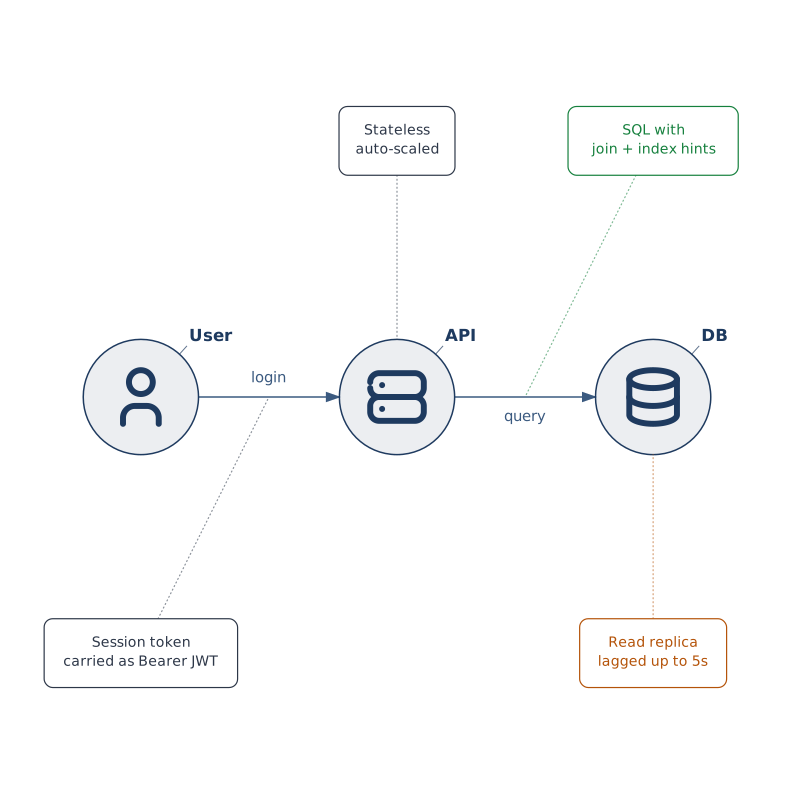
In the example above, four notes annotate different parts of the flow:
- Stateless / auto-scaled points at the
apinode - SQL with join points at the
queryconnector (note how the"query"label on the connector shifts out of the way so it doesn't sit on top of the note's dotted leader) - Session token points at the
loginconnector - Read replica points at the
dbnode, in an amber color
Syntax
note @<pos> (<target-list>) "<text>" [attr=value ...] [{ body }]@<pos>is a single cell (@A1or@col,row). Required.(a, b, c)is the optional list of node / connector ids this note points at. Omit for a standalone callout."<text>"is the note's body text. Required.- Trailing
attr=valueor{ … }body overridesbg,color,labelScale.
note @B1 (api)     "Stateless\nauto-scaled"
note @A3 (login)   "Session token carried as Bearer JWT"
note @C3 (db, api) "Multi-target note" color=#b45309
note @D4           "Standalone — no leader line"
Standalone notes, multi-target, bold
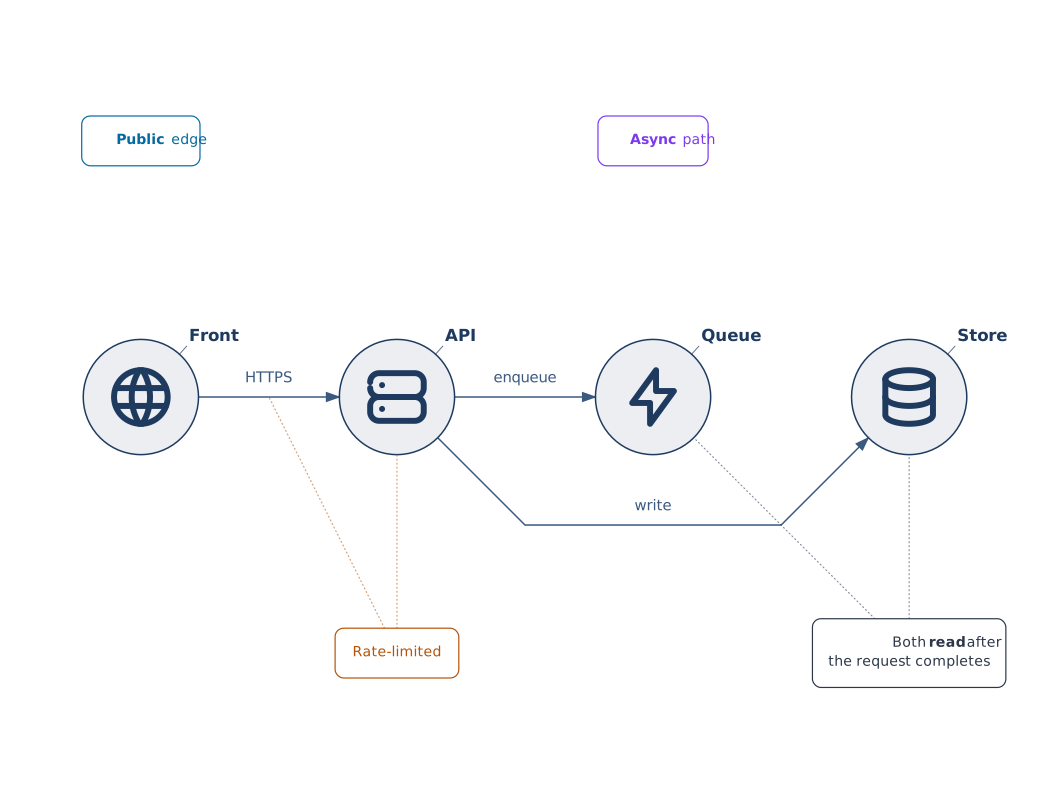
Three patterns show up in the diagram above — all of them are regular note statements, just using different optional pieces of the grammar.
Standalone (no (…) target list) — useful for section headers or general prose in an empty cell:
note @A1 "**Public** edge"   color=#0369a1
note @C1 "**Async** path"    color=#7c3aed
Multi-target — one note points at several ids. Leaders fan out from the note body, each stopping short of its target:
note @D3 (queue, store) "Both **read** after\nthe request completes"Targets can mix nodes and connectors; duplicates are dropped.
Bold text — wrap a segment in **…** for inline emphasis. This is the only inline formatting notes parse; there's no italics, links, or full Markdown:
note @B3 (req, api) "Rate-limited" color=#b45309\n inside the string forces a hard line break; long lines wrap to the cell width automatically, with CJK-aware kinsoku (no punctuation stranded at line-start or line-end).
targets: what the leader lines point at
Each id inside (…) is matched against:
- Node ids (declared by
icon :namein DSL or{ id: 'name' }in JSON) - Connector ids (set via
id=<name>in DSL orid: '<name>'in JSON)
An unresolved target produces an integrity error — same rule as connector from / to, so broken references surface immediately.
Leaders render as dotted lines (stroke-dasharray="1 3") in the note's color at reduced opacity. They're included in the label collision set, so node / connector / region labels automatically avoid sitting on top of a note's leader.
Styling
| Field | Default | Effect |
|---|---|---|
bg | #ffffff | Background fill of the note body |
color | theme.text | Border + text + leader-line color |
labelScale | 1 | Font-size multiplier |
Setting color=#b45309 recolors the border, the text, and the leader line together, so a single attribute produces a cohesively-themed note. Use bg when you need the body fill to differ from white (e.g. on a dark theme with theme.bg: '#0f172a').